Skip to content

Inclusion Is Not Optional

More than 1 in 5 people in Northern Ireland are Disabled 

We are Disability Action, a disabled people's organisation run by disabled people, for disabled people. Together, we work with our members and community to remove barriers, challenge inequality and drive positive change across Northern Ireland.

Our vision is an inclusive society that works with us, listens to us and adapts to meet the needs of everyone. We believe that every disabled person has the right to live in a way that meets their individual needs, to be respected for who they are, and to participate fully in all aspects of life without prejudice or discrimination.

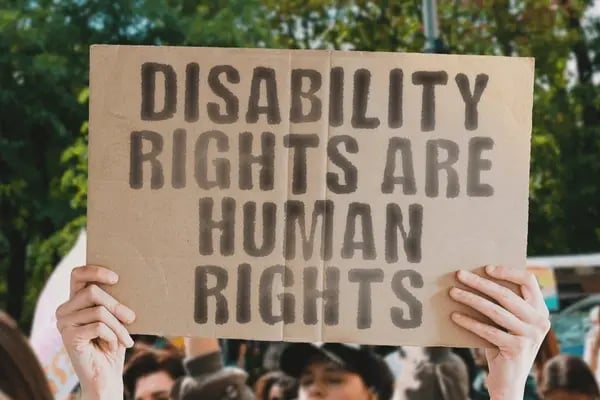
Photograph of an activist holding a sign saying 'Disability Rights are Human Rights'
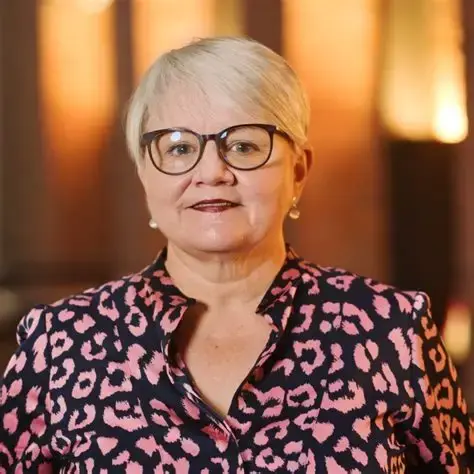
Pictured, Andrea Brown, CEO of Disability Action

OUR LEADERSHIP

Andrea Brown

As Chief Executive of Disability Action, Andrea leads the strategic direction and operational delivery of services across Northern Ireland, working to uphold the human rights of disabled people in all aspects of society.
Since joining Disability Action in 2003, Andrea has championed inclusive policies and built partnerships that strengthen our mission to bring about attitudinal change and change government policy in relation to disabled people.
Andrea joined the charity in 2003 and was officially appointed to the Role of CEO in June 2021 after serving as Interim CEO since March 2020.

Andrea is passionately committed to the third sector in Northern Ireland and to increasing the inclusion of disabled people in society.
1948: Health Services Act (NI) 1948 is passed in Northern Ireland along with other legislation such as the National Assistance Act.  Keeping in line with developments in England.  1948: Mental Health Act passes and move towards a more therapeutic approach albeit in institutional settings.  1950’s: By the end of the 1950’s inpatient numbers at psychiatric hospitals are peaking.  Hollywell having over 800 residents and Downshire over 1,100.  1950’s: A standing Committee on disability under what is now the Northern Ireland Council for Voluntary Action (NICVA) is established and would eventually become Disability Action.  1959: Muckamore Abbey Hospital opens to offer treatment through training for people with learning disabilities.  1960: Parkanaur College opens as a specialist further education college for students aged 18+.

1821: legislation passed for ‘District Lunatic Asylums’ (still in place in Northern Ireland comes into being).

1932: Mental Health Act (NI) passed into law.

1930’s: Nazis forcibly sterilise 360,000 disabled people.

1939 – 1941: Nazis systematically murder some 250,000 disabled people under their Action T4 ‘purity programme’.

1944: Disabled Persons (Employment) Act provides the first definition of a disabled person (rather than an impairment specific definition).

1945: 300,000 armed service personnel and civilians in the UK acquired disabilities arising from World War 2.

Timeline 2_5

1948: Health Services Act (NI) 1948 is passed in Northern Ireland along with other legislation such as the National Assistance Act. Keeping in line with developments in England.

1948: Mental Health Act passes and move towards a more therapeutic approach albeit in institutional settings.

1950’s: By the end of the 1950’s inpatient numbers at psychiatric hospitals are peaking. Hollywell having over 800 residents and Downshire over 1,100.

1950’s: A standing Committee on disability under what is now the Northern Ireland Council for Voluntary Action (NICVA) is established and would eventually become Disability Action.

1959: Muckamore Abbey Hospital opens to offer treatment through training for people with learning disabilities.

1960: Parkanaur College opens as a specialist further education college for students aged 18+.

Timeline 3_5

1961: Minister for Health Enoch Powell speech in Westminster signals the policy shift to ‘community care’ in mental health and learning disability.

1963: Industrial Therapy Organisation (ITO) formed at Downshire Hospital becomes the organisation Action mental Health and extends their work across Northern Ireland.

1972: Health and Personal Social Services (NI) Order 1972 comes into law.

1973: Direct Rule begins in Northern Ireland and 26 local councils are established.

1976: The Mobility Allowance is introduced. This is a cash benefit to allow people to pay for travel costs.

1978: Chronically Sick and Disabled Persons (NI) Act comes into law. Gives rights to disabled people in relation to practical assistance in the home, provision of meals and participating in services.

1981: International Year of Disabled Persons - designated by the UN.

1986: Mental Health (NI) - change to mental health legislation - creation of more rights to challenge.

1989: Disabled Persons (NI) Act 1989 creates a specific duty in relation to assessments.

1989: Northern Ireland Council on Disability becomes and independent organisation.

Timeline 4_5

1990's: Rights Now Campaign grew in strength and disabled people took to the streets to protest about the lack of rights.

1991: PPRU Survey on disability produces the first study of numbers and circumstances of disabled people in Northern Ireland.

1993/1994: Ceasefires called in NI by paramilitary organisations.

1995: Disability Discrimination Act comes into law.

1996: NI Disability Council regulations passed for it's creation in NI.

1996: Disability Rights Fund established with £1 funding from EU Peace Programme.

1998: Good Friday / Belfast Agreement is signed in Belfast. This is widely acknowledged as the end of the 'troubles'.

1988: The Northern Ireland Act 1998 brings forward legislation that will establish devolved governments in NI. Many elements also relate to equality and human rights provisions.

1998: Section 75 of the Northern Ireland Act brings forward Statutory Duties to promote equality of opportunity and good relations (which includes disabled people).

1999: Equality Commission takes over the function of the Northern Ireland Disability Council.

2000 - 2010  2001: Centre for Independent Living Northern Ireland is established.  2003: International Year of Persons with Disabilities designated by the UN.  A series of programmes and events take place across Northern Ireland.  2004: Promoting Social Inclusion Group on Disability established by OFMDFM to develop a disability strategy.  2004: Formal recognition of British and Irish Sign Language (BSL and ISL).  2005: Special Education and Disability (NI) Order comes into force.  Gives stronger educational rights for disabled people.  2006: Disability Discrimination Order (NI) comes into force.  It places new duties on public authorities.  2007: United Nations General Assembly adopts the UN Convention on the Rights of Persons with Disabilities (UNCRPD).  2007: Following another period of political instability the NI Assembly and Executive return.  2009: UK ratifies the UNCRPD with a number of reservations.  2009: Promoting Social Inclusion Disability Reports are published by OFMDFM with 82 recommendations for government.

2000 - 2010

2001: Centre for Independent Living Northern Ireland is established.

2003: International Year of Persons with Disabilities designated by the UN. A series of programmes and events take place across Northern Ireland.

2004: Promoting Social Inclusion Group on Disability established by OFMDFM to develop a disability strategy.

2004: Formal recognition of British and Irish Sign Language (BSL and ISL).

2005: Special Education and Disability (NI) Order comes into force. Gives stronger educational rights for disabled people.

2006: Disability Discrimination Order (NI) comes into force. It places new duties on public authorities.

2007: United Nations General Assembly adopts the UN Convention on the Rights of Persons with Disabilities (UNCRPD).

2007: Following another period of political instability the NI Assembly and Executive return.

2009: UK ratifies the UNCRPD with a number of reservations.

2009: Promoting Social Inclusion Disability Reports are published by OFMDFM with 82 recommendations for government.

CONNECT WITH US

Join Us in Promoting our Rights

We're here for our community. Whether you need support, want to get involved, or would like to learn more about our work, we're ready to help.

As disabled people, we understand the barriers that can exist and the changes that are needed. Together, we are building a more inclusive Northern Ireland, promoting equality and advancing the rights of disabled people.